

Pricing clarity
How to read a chauffeur rental estimate before you confirm
Understand package kilometres, extra running, fuel options, driver allowance, tolls, parking, and the charges that depend on actual use.
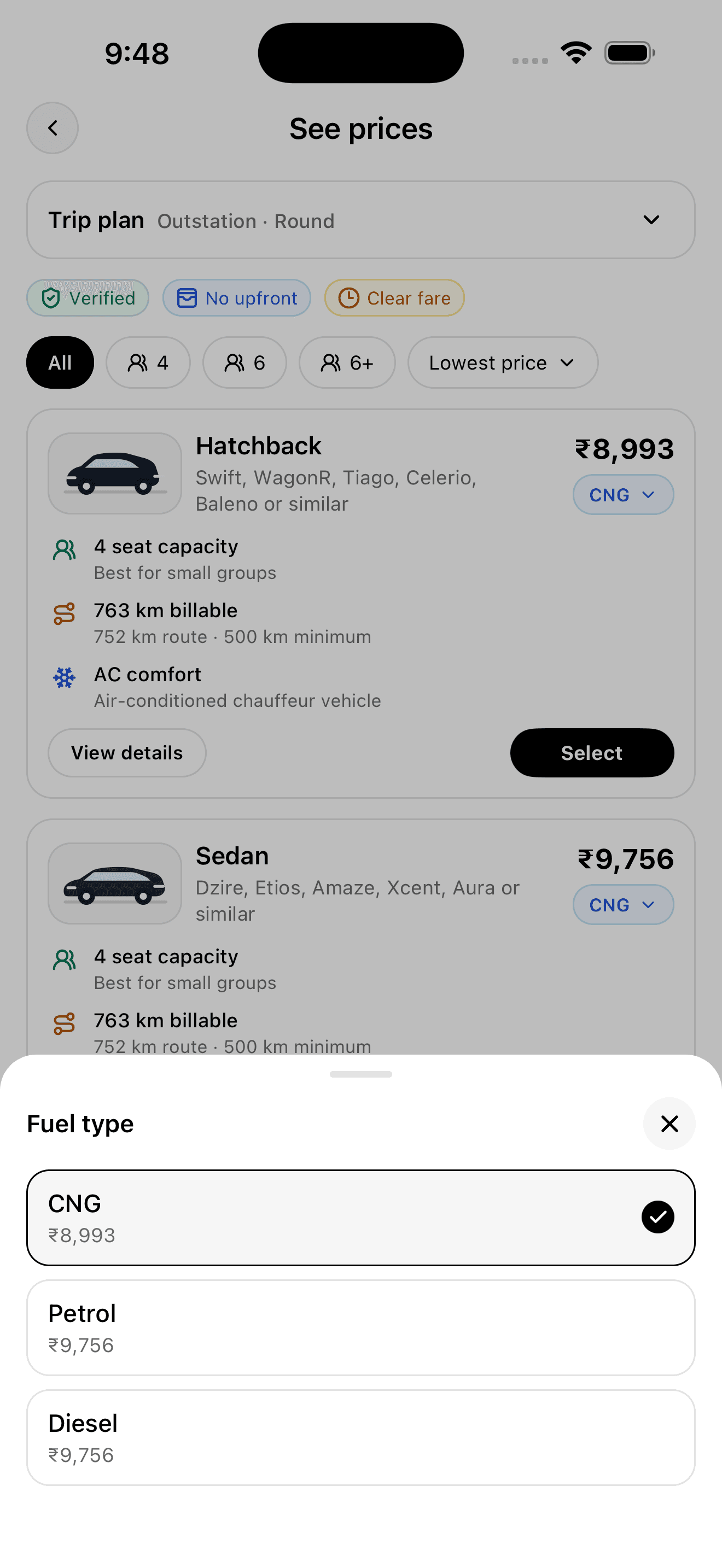
Separate the package from actuals
A rental estimate usually combines a base package with charges that depend on the trip. The package may cover a number of hours or kilometres. Actuals can include extra running, extra time, tolls, parking, permits, and route changes.
The estimate should label each category clearly. A single total without its assumptions is difficult to compare and easy to misunderstand.
Check the distance and time rules
For an hourly city rental, confirm included hours and kilometres plus both overage rates. For an outstation trip, confirm the billable-kilometre basis, minimum daily running, and whether the return to the operating city is included.
Also ask when a calendar day, driver day, or night allowance begins. A late return can affect the estimate even if the route itself does not change.
Know who pays for fuel and road costs
Some products include fuel in the per-kilometre rate; others allow a customer-managed fuel option. Neither model is automatically better, but the responsibility and reconciliation method must be explicit.
Tolls, parking, interstate permits, airport fees, and entry charges should be identified as included, excluded, or payable at actuals. Keep receipts or trip records where actual reimbursement applies.
Compare like with like
When comparing estimates, use the same route, dates, vehicle class, passenger count, luggage, fuel basis, and inclusions. The lowest headline number may not remain the lowest once realistic trip inputs are added.
Before payment, keep the approved estimate and cancellation terms tied to the booking. After completion, compare actual charges with the recorded trip rather than relying on memory or isolated messages.