

Outstation planning
How to plan a multi-stop outstation trip without last-minute surprises
A practical checklist for route order, billable distance, driver time, luggage, and return planning on an Indian outstation journey.
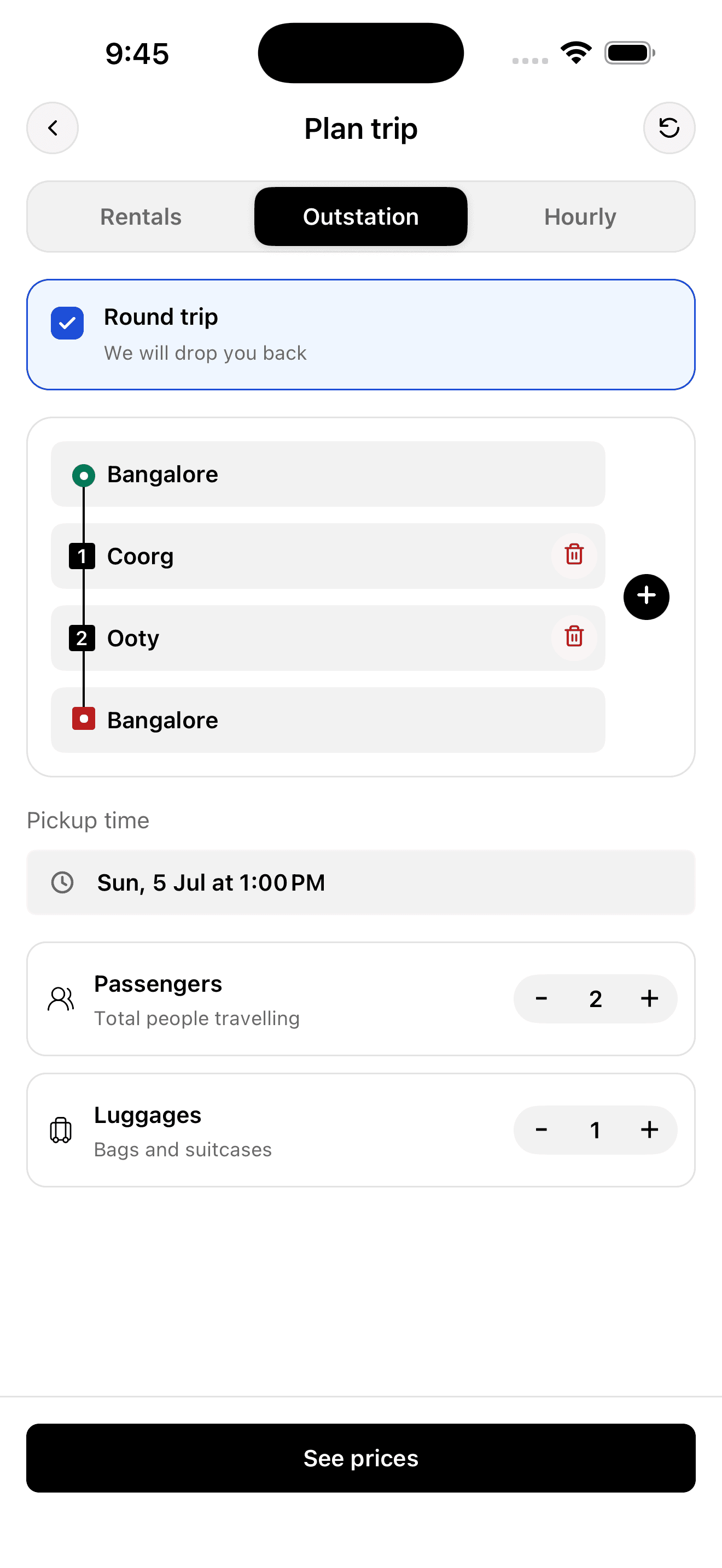
Start with the complete route, not only the destination
A multi-stop outstation trip is operationally different from a one-way airport transfer. The vehicle may stay with you for several days, the driver needs realistic rest and reporting times, and every added stop can change both distance and duration.
Write the route in the order you expect to travel it: pickup, intermediate stops, overnight locations, final destination, and return. Mark optional stops separately so the quote does not treat every idea as a confirmed detour.
- Use exact pickup areas instead of only a city name.
- Add hotel or overnight locations before sightseeing stops.
- State whether the vehicle must return to the origin city.
- Share any fixed arrival windows, events, or check-in times.
Understand billable kilometres
Outstation estimates may use the vehicle's billable route rather than only the kilometres visible between your pickup and destination. Depending on the operating model, this can include travel from a fleet base, the return leg, local running, or a minimum daily distance.
Ask for the distance basis in writing. A useful estimate separates expected route kilometres from extras such as parking, tolls, state permits, waiting, and route changes.
Choose for people and luggage together
Seat count alone is not enough. Four adults with airport luggage may need more usable space than six passengers travelling light. Hill routes, elderly travellers, child seats, and long driving days also affect the right vehicle class.
Share passenger count, large bags, mobility needs, and any preference for a captain-seat layout before supply is matched. Changing vehicle class after assignment is harder than reviewing it upfront.
Confirm the operating plan
Before confirming, review the pickup time, driver allowance, night charges, fuel basis, included kilometres, extra-kilometre rate, toll and parking treatment, cancellation terms, and the process for changing a stop.
A strong trip plan should tell the customer what is known, what is estimated, and what can still change. That clarity matters more than a deceptively simple headline fare.