

Vehicle guide
Sedan, SUV, or Tempo Traveller: choosing the right chauffeur vehicle
Match vehicle capacity to passenger comfort, luggage, route conditions, trip length, and the kind of journey you are planning.
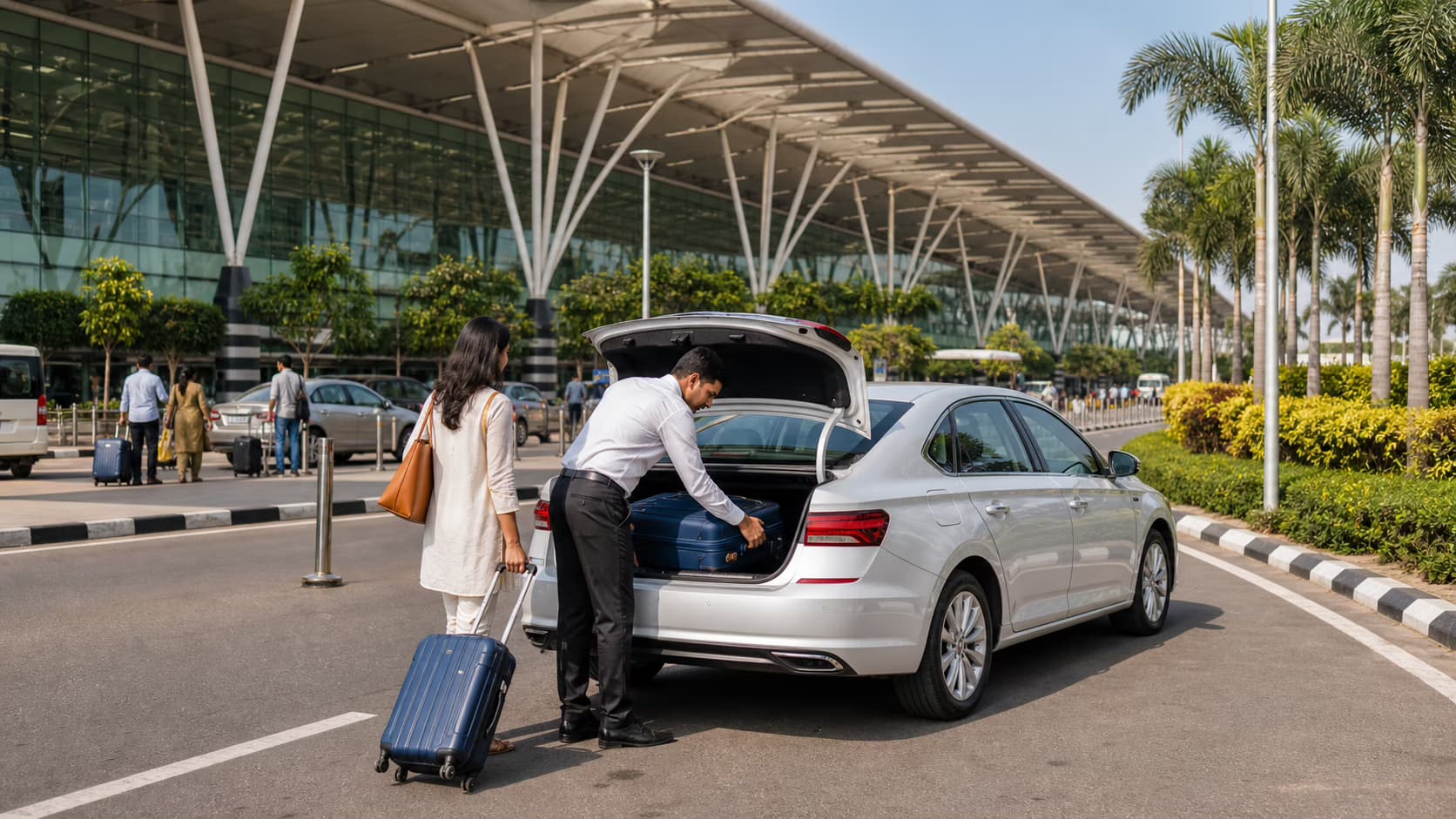
A sedan is efficient for lighter plans
A sedan is usually a sensible fit for one to three passengers, routine airport movement, business travel, or an outstation trip with moderate luggage. It is easier to move through city traffic and is often the most economical chauffeur-driven option.
Do not assume every sedan has the same rear-seat and boot space. Ask which model class is being offered and share luggage before assignment.
An SUV adds usable flexibility
An SUV or MPV is better when the group has more passengers, bulky luggage, elderly travellers, or a long route where cabin comfort matters. It can also be the safer operational choice for uneven access roads and hill destinations, subject to the actual model and road conditions.
Some seven-seat vehicles have limited luggage capacity when every seat is occupied. Passenger count and bag count must be reviewed together.
A traveller works for groups, not just headcount
A Tempo Traveller is useful for wedding guests, office teams, family groups, and journeys where keeping everyone together is more important than taking separate cars. Review seat layout, air conditioning, luggage storage, step height, and permit suitability for the route.
For events, a mixed fleet can work better than one large vehicle. Sedans can handle senior guests or airport pickups while an SUV or traveller moves the main group.
Use a repeatable fit check
Before selecting a class, compare the same five inputs every time: passengers, luggage, trip duration, route conditions, and access needs. Then confirm the exact vehicle category, not an unrealistic promise of one particular model.
A reviewed match reduces uncomfortable upgrades, last-minute vehicle swaps, and pricing disputes on the travel day.